If you are registered under GST, every taxable sale needs a proper invoice, and the GST rules decide what it contains, when you issue it and how long you keep it. Getting it right the first time saves you credit notes, unhappy customers whose input tax credit does not match, and awkward questions in an audit.
This article is general information, not tax or legal advice. GST rules change often, so check the GST portal or ask your CA about your own case.
What a tax invoice must show
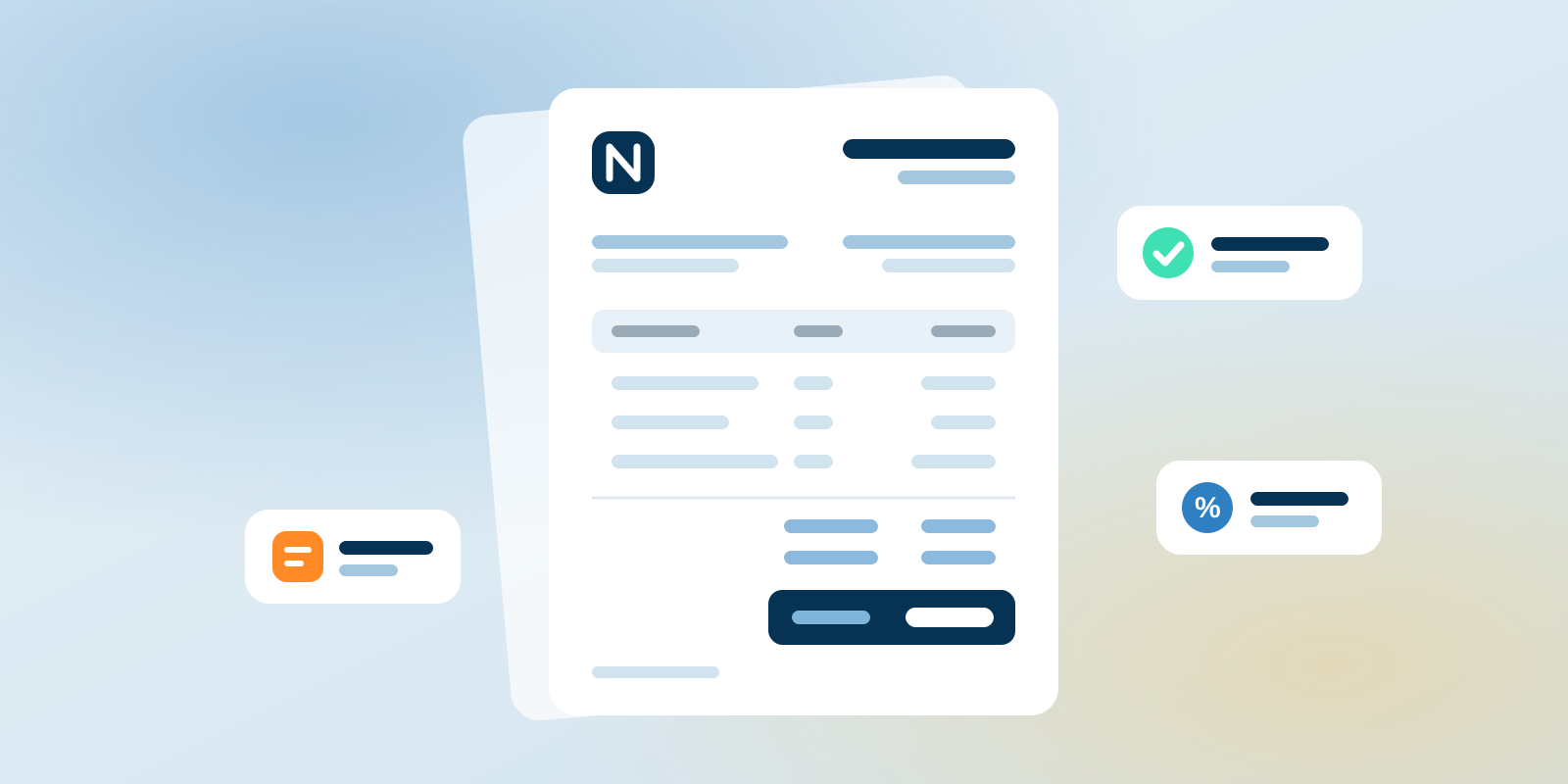
A tax invoice must contain these details:
- Your details: the supplier's name, address and GSTIN.
- Invoice number: a consecutive serial number of up to 16 characters, unique for the financial year. Letters, numbers, hyphens and slashes are allowed.
- Date of issue.
- Customer details: name, address and GSTIN if the customer is registered. For an unregistered customer, the name, delivery address and state with its code are needed when the value is ₹50,000 or more, or when the customer asks for them.
- HSN or SAC code: HSN for goods, SAC for services. The number of digits depends on your turnover in the previous year, generally 4 digits up to ₹5 crore and 6 digits above that.
- Description, quantity and value: what you supplied, the quantity and unit for goods, the taxable value after discounts and the total value.
- Tax rate and amount: CGST and SGST (or UTGST), or IGST, each shown separately, plus cess where it applies.
- Place of supply: with the state name for inter-state supplies, plus the delivery address if it differs from the place of supply.
- Reverse charge: whether tax is payable on reverse charge.
- Signature: the signature or digital signature of the supplier or an authorised person.
Not every registered business issues a tax invoice. Composition taxpayers and suppliers of exempt goods or services issue a bill of supply instead.
Timing matters too. A goods invoice is issued at or before removal or delivery; a services invoice is generally due within 30 days of the supply.
Intra-state or inter-state
Which tax you charge depends on where you are registered and on the place of supply.
- Same state: if the place of supply is in your own state, you charge CGST and SGST, each at half the rate. In some union territories, UTGST takes the place of SGST.
- Different state: if the place of supply is in another state, you charge IGST at the full rate.
At 18%, that means 9% CGST plus 9% SGST, or 18% IGST. For goods, the place of supply is usually where the delivery ends. For most services to a registered business, it is the customer's registered location, but some services, such as those linked to property or events, have their own rules.
One clean number series per financial year
India's financial year runs from 1 April to 31 March, and invoice numbers must be unique within it. Most businesses start a fresh series each year with the year in the number, for example INV/26-27/00001. Novera numbers its own invoices the same way, such as NOV/26-27/00001.
- Count the characters before you settle on a format. The limit of 16 includes slashes and hyphens.
- You may run several series, for example one per branch or one for exports, as long as each number is unique in the year.
- Never delete an invoice to close a gap. Cancel it and keep the record.
- Give credit notes and debit notes their own series.
Your GSTR-1 return includes a summary of the documents you issued, so a tidy series also makes filing easier.
Credit notes and debit notes
Once an invoice is issued, don't edit it. Correct it with a separate document.
- Credit note: when the value or tax on the invoice was too high, goods were returned, or services were deficient.
- Debit note: when the value or tax was too low.
A credit note carries its own serial number and date, both parties' details and GSTIN, the original invoice number and date, the value, and the rate and amount of tax.
There is also a deadline. A credit note must be declared no later than 30 November after the end of the financial year in which the supply was made, or by the date you file the annual return, if that is earlier. For sales made in 2025-26, that means 30 November 2026 at the latest. Tell your customer before you issue one, because it changes their input tax credit too.
E-invoicing and the IRN
E-invoicing applies to the B2B invoices, credit notes and debit notes of businesses whose aggregate turnover has crossed the limit in any financial year since 2017-18. The limit is currently above ₹5 crore aggregate turnover; check the GST portal for the current limit. Once you cross it, the obligation stays even if turnover later falls. A few sectors, such as banking and insurance, are exempt.
It works in four steps:
- You create the invoice in your own software.
- You upload its details to an Invoice Registration Portal (IRP) in the standard format.
- The IRP checks the data and returns an Invoice Reference Number (IRN) and a signed QR code.
- You print the QR code on the invoice and send it to your customer.
Above the limit, a B2B invoice without an IRN is not a valid tax invoice. Larger businesses also have a time limit for reporting invoices to the IRP, so check the current rules. Sales to consumers are outside e-invoicing.
Common mistakes
- A mistyped customer GSTIN, so your customer cannot claim the credit.
- The wrong place of supply, which leads to the wrong type of tax.
- A broken series: duplicates, a restart in the middle of the year, or reused numbers of cancelled invoices.
- A missing HSN or SAC code, or too few digits.
- No reverse charge note when reverse charge applies.
- Editing an issued invoice instead of issuing a credit or debit note.
- Rounding per line on some invoices and per total on others, so totals do not match your return.
Keeping records
Keep invoices, credit and debit notes and related records for 72 months from the due date of the annual return for that year. Electronic records are fine if they are backed up and can be produced when asked. Keep the papers around each sale too, such as delivery challans, e-way bills and payment receipts, and reconcile your sales register with GSTR-1 every month.
A billing tool helps keep the series, the tax split and the totals consistent. Novera's Sales & Finance suite keeps customers, invoices and payments in one place and prints invoices as PDF with your logo. Whichever tool you use, check a sample invoice against the list above before you rely on it. To see Novera, look at the plans and prices or book a demo.
Questions and answers
Do I need an invoice for every sale?
Yes, a registered supplier issues a tax invoice or a bill of supply for every taxable supply. For a sale under ₹200 to an unregistered buyer who does not ask for an invoice, you may issue one consolidated invoice at the end of the day instead.
Is a PDF invoice valid?
Yes. An electronic invoice is fine as long as it shows every required detail. If your turnover is above the e-invoicing limit, your B2B invoices also need an IRN from the IRP.
How do I fix a wrong invoice?
Don't edit the original. For a wrong value or tax amount, issue a credit or debit note. For other errors, such as a wrong GSTIN, the GSTR-1 return has amendment options; ask your CA which route fits.